Ecosystem Pond Installation in Massachusetts
A living, self-sustaining water garden, where fish, plants, beneficial bacteria, and natural rock work together the way nature intended. Built to age well, not just look good on day one.
Will a pond really take care of itself?
The honest answer: yes, but only if it's built correctly. A properly designed ecosystem pond is a living system. When the biology, circulation, and filtration are in balance, the pond handles most of the work on its own.
What you won't be doing is constantly fighting chemistry, constantly battling algae, or troubleshooting a system that was never designed to work in the first place. The maintenance burden is a design outcome, not an inevitable feature of pond ownership.
A properly built ecosystem pond typically demands 15–30 minutes of maintenance per week during the active season. Compare that to the hours a poorly designed system can consume.
The Biological Cycle
How big should your pond be?
Less than most people assume, but slightly larger than your first instinct will tell you. Here's what each size actually feels like in a real yard.
Approx. Gallons
~2,000
Fish Capacity
12–15 koi
Waterfall Drops
1–2 waterfalls
Typical Build Time
3–4 days
Starting Investment
From $22,000
The size of a car parking space. Our most popular size — biologically forgiving, visually impactful, deeply satisfying to live with.
Almost everyone who builds a medium wishes they'd built a large. The cost difference is usually smaller than people expect.
Get a size recommendation for my yardYour pond's first year, what actually happens
The Fill
What You'll See
Crystal clear water.
What's Happening Biologically
No biological cycle yet established. Water is chemically neutral.
What to Do
Run pump 24/7. Add beneficial bacteria starter dose. Add dechlorinator if on municipal water. Do not add fish yet.
Normal or Not?
NormalEverything is as it should be.
What you actually do, month by month
New England ponds have a rhythm. Here's the honest version of what ownership looks like across the year.
Fish feeding: Feed twice daily, watch during heat
- Watch for surface gasping in heat waves (= low oxygen)
- Add shade with floating plants
- Run waterfall continuously
- Weekly bacteria
- Skim debris
The questions people are afraid to ask
What an ecosystem pond costs in Massachusetts
In New England, a professionally designed and installed ecosystem pond typically ranges from around $15,000 for a smaller feature up to $60,000 or more for a larger, more elaborate build. The variables that move the number are real, and worth understanding.
What Your Investment Pays For
Labor
Skilled hand work — stone placed one at a time. The largest cost in a professional build. Shortcuts here show in year three.
Materials
Liner, underlayment, rock, gravel, plumbing — all sized for real conditions, not theoretical minimums.
Equipment
Pump, skimmer, biological filter — quality components sized for your specific system.
Craftsmanship
19 years of knowing how water moves through stone. This doesn't show up on an invoice, but it shows up in year ten.
We've seen professionally built, mature ecosystem ponds specifically noted in property appraisals as contributing meaningful value, in one recent case, on the order of tens of thousands of dollars. A well-built pond gives you a backyard you'll use every day in the meantime, and that has its own kind of value.
A running ecosystem pond costs roughly $30–$60 per month in electricity during the active season in Massachusetts, similar to a window air conditioner. Water use for topping off evaporation is minimal.
Optional Add-On
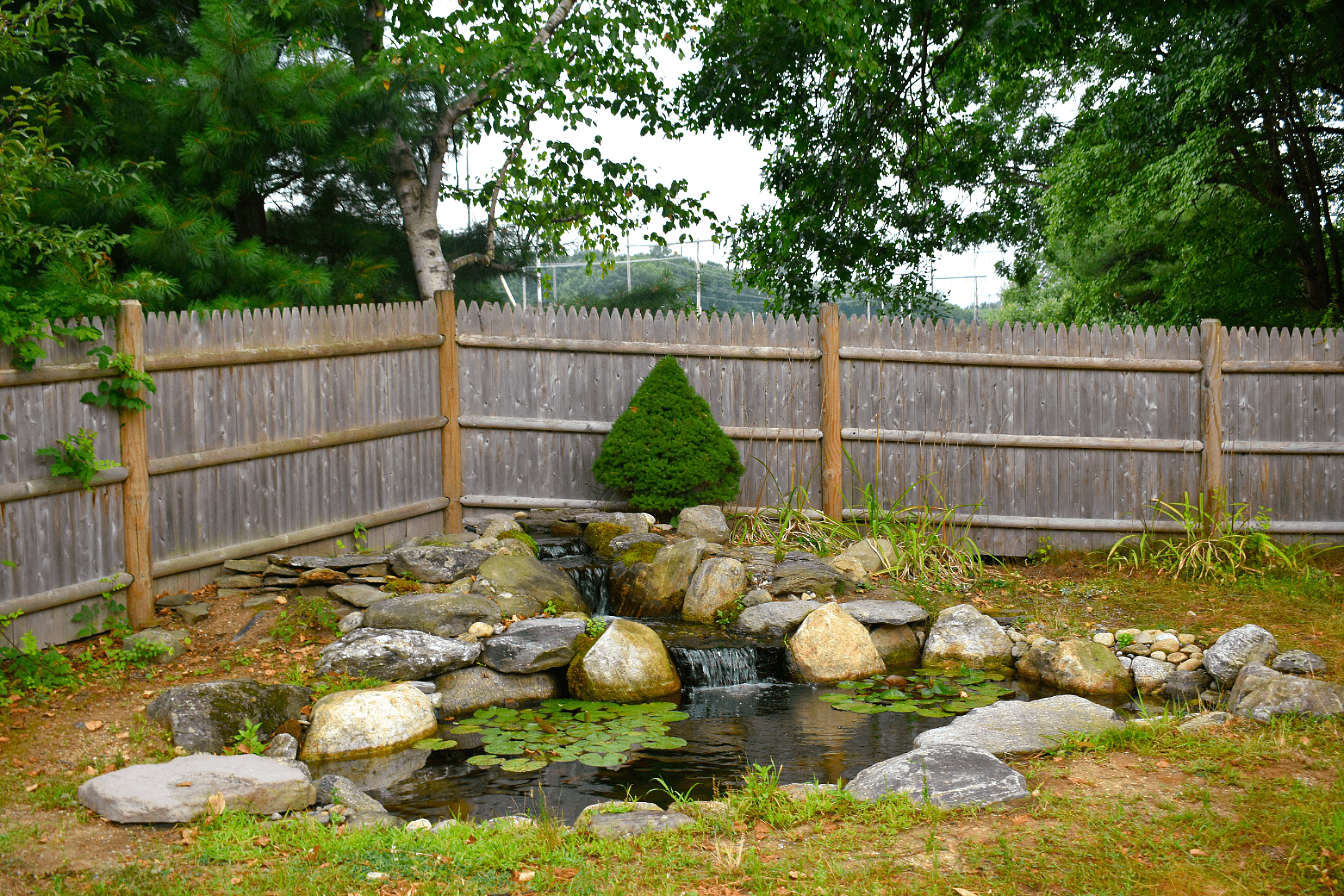
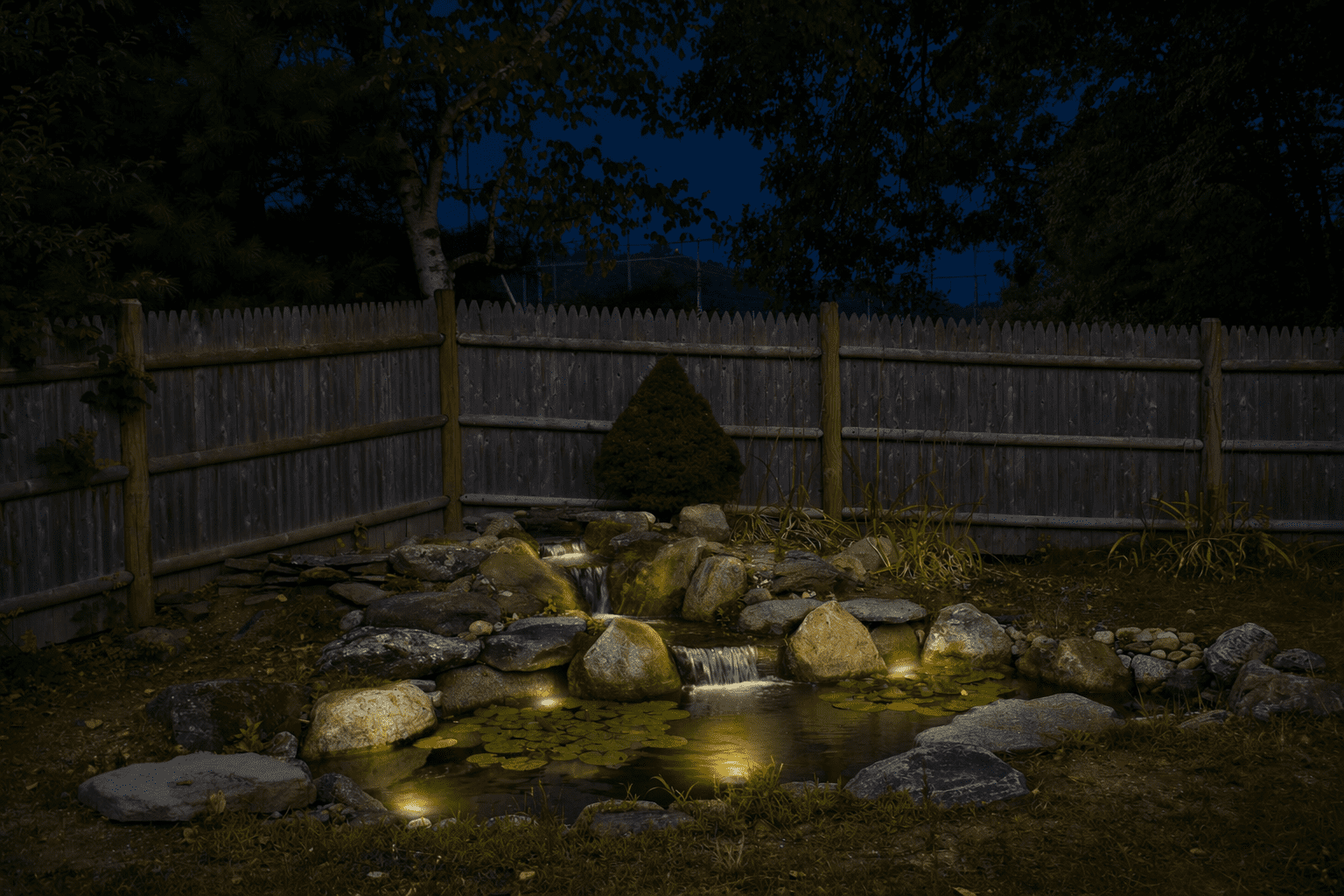
Don't stop at sunset.
Underwater LED lighting is significantly easier to include during initial construction than to retrofit later. See what it does to a feature like yours.
Frequently Asked Questions
An ecosystem pond is designed to function the way nature intended — using the right balance of fish, plants, rock, gravel, beneficial bacteria, and filtration to maintain water quality naturally. Every component plays a biological role. When built correctly, these elements support one another instead of competing. The system largely takes care of itself. That's fundamentally different from what store-bought kits or landscaper-built features typically deliver.
Not at all. Many clients love a pond without fish — and that's a completely valid choice. If fish are something you want, koi are the most popular option and they change how we size filtration and design depth. We'll build it to support whichever direction you go, including the option to add fish later if you change your mind.
Yes — with proper depth (24–30 inches minimum) and a de-icer or aerator maintaining gas exchange through the ice. Koi enter a hibernation-like state and survive New England winters reliably in a properly designed pond. Water temperature at 2-foot depth stays above freezing even when the surface is frozen.
Three come up consistently. First: going too small — a slightly larger pond is dramatically more forgiving biologically and more satisfying to live with. Second: choosing a contractor based on price alone. Third: deciding not to add underwater lights during initial construction. After those, overfeeding fish and skipping the spring cleanout are the most consistent ongoing mistakes.
In most cases, yes. We've seen professionally built, mature ecosystem ponds specifically noted in property appraisals as contributing meaningful value — in one recent case, on the order of tens of thousands of dollars. Features that feel permanent, intentional, and integrated into the landscape tend to be viewed as assets.
Kit systems are assembled to a price point — undersized filtration, minimally sized liners, limited biological design. Professional ecosystem builds are designed to function: the right pump for actual head pressure, filtration sized for the real fish load, liner protected by proper underlayment. The difference becomes visible within 2–3 years. Kit systems typically require more intervention and often a rebuild. Well-designed ecosystem builds tend to get easier over time as biology matures.
The most important distinction is whether water features are the contractor's primary craft or an add-on service. Ask to see completed work — not just proposals. Ask how they handle the biological side of the system: if filtration is discussed primarily as equipment specs rather than biological function, that tells you something. Ask what happens after installation. Ask how they approach New England conditions specifically.
Most residential pond installs run 2–5 days from first shovel to running feature. A well-designed smaller pond is often complete in 2–4 days. Larger builds with multi-tiered waterfalls or custom rock work take longer. We work continuously once we begin — we don't start a project and leave for days at a time.
A spring cleanout is a targeted reset, not an aggressive scrub-down. We drain the pond, transfer fish to a holding tank, pressure-wash rock surfaces and liner, clean (not replace) filter media, inspect all equipment, refill with treated water, return fish, and initiate the spring bacteria program. The key is preserving the beneficial biology you've built — not stripping it in the name of “clean.”
We build from late spring through freeze-up — typically May through November in Massachusetts. Spring cleanout season transitions into summer and fall construction builds. If you're planning for next season, winter is the right time to start the conversation and get on the schedule.
WATCH
Watch how an ecosystem pond comes together.
How we build ecosystem ponds
Ready to start?
Let's design your pond.
Every pond starts with a conversation. Tell us what you're imagining and we'll come take a look at your property, no commitment, no pressure.